
Bunbō Gobō (The Five Treasures of the Study)
is a collection of five stationery items, comprising the traditional "Four Treasures of the Study"—brush, inkstick, inkstone, and paper—with the addition of a glass pen, a Japanese innovation.
Each item is a masterpiece, crafted from premium materials with exquisite techniques and an elegant design suited for modern lifestyles.

The Story Behind the Development
Kuretake was founded in 1902 as an inkstick manufacturer in Nara. Driven by the desire to preserve the inkstick-making techniques cultivated in the historic land of Nara and to share the excellence of Japanese craftsmanship with the world, we began developing calligraphy supplies under the concept of "Quality for Everyday Life."

Enjoy the rich experience of handwriting with the sound and feel of grinding ink, the texture of the paper, and the smooth flow of the brush.
All items in the Bunbō Gobō collection are Made in Japan.
-Masterpieces Infused with Artisan Skill-
Toyohashi Brush (Aichi Prefecture / Sugiura Seppitsujo Co., Ltd.)
Traditional Craftsman, Yoshimitsu Sugiura

――――――――――――――――――――――――
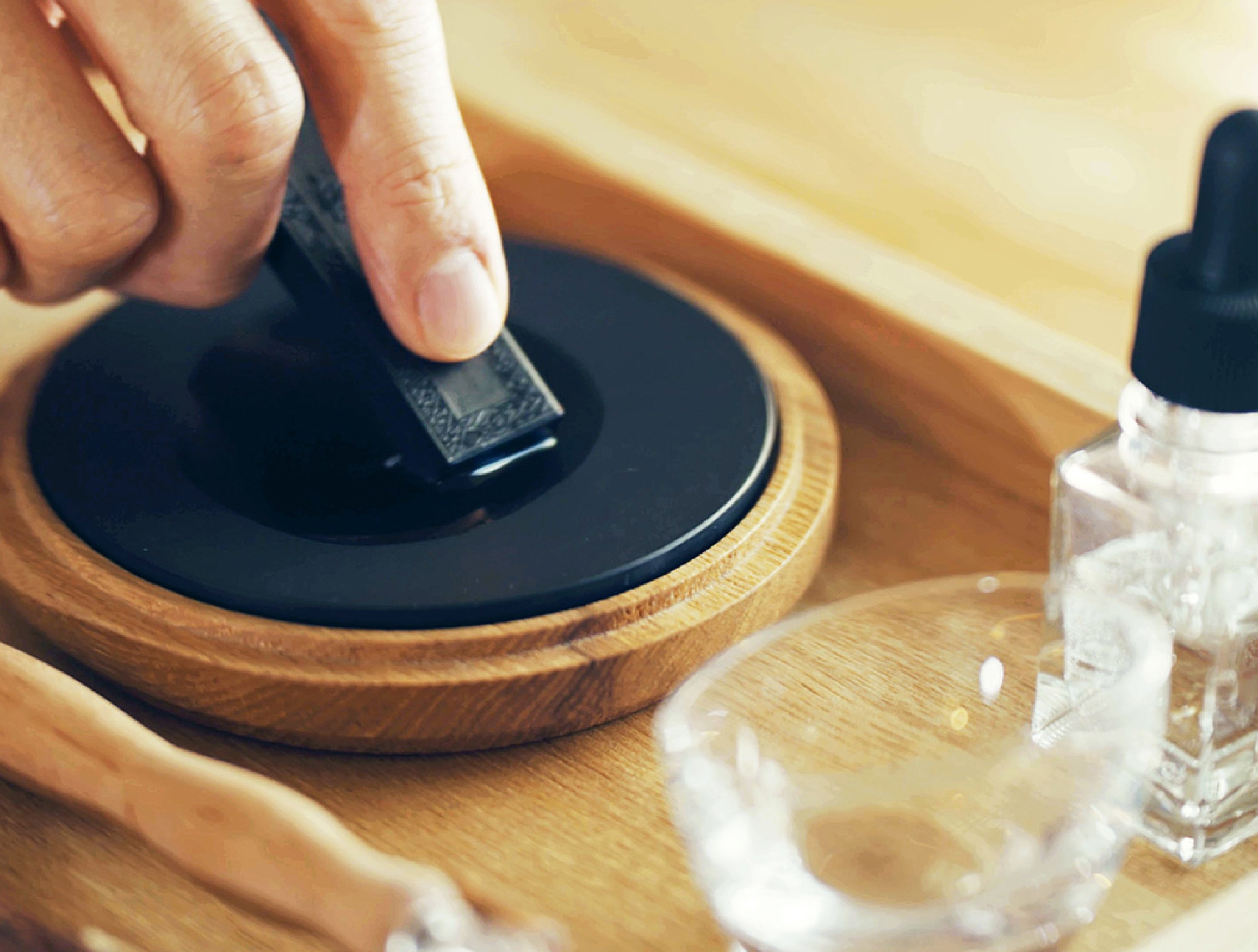
Inkstick (Nara Prefecture / Kuretake Co., Ltd.)
Inkstick Mold Carver, Genshin Yoneya

Inkstick making begins with carving the wooden mold. For all inksticks, from practical ones to ornamental pieces expressing intricate designs considered works of art, the wooden mold is an indispensable part, essential to its life. Pear wood is used for these molds, and its characteristic hardness ensures that dimensions do not warp even when absorbing moisture from the ink mixture of soot, animal glue, and fragrance. The antique inkstick "Sho-toku" is a rare masterpiece, approximately 30 years old since its creation, made from ultrafine particles of pine soot from Kishu (Wakayama Prefecture). Please enjoy its delicate design and elegant, brownish ink color.
――――――――――――――――――――――――
Inkstone (Miyagi Prefecture・Tokyo / Hōkendō Co., Ltd.)
Inkstone Artisan, Takashi Aoyagi

The circular shape is one of the oldest and most ergonomically superior designs in the history of inkstone craftsmanship. While leveraging its functionality, we aimed for a form that seamlessly integrates into modern life.
Unlike conventional inkstones, the "sumuri-ba" (grinding surface) has a gentle slope towards the center, creating a "mortar shape" where ground ink collects at the center, making it easy for a glass pen to draw up. The inkstone material used is Genjōseki from Miyagi Prefecture. It is one of Japan's representative inkstone materials, known for its durability despite being thin, and its excellent ink-grinding performance. We hope this inkstone will gently accompany the user's daily life.
――――――――――――――――――――――――
Paper (Nara Prefecture / Fukunishi Washi Honpo)
Handmade Washi Paper & Traditional Craftsman, Masayuki Fukunishi

Fukunishi Washi Honpo has continuously preserved the tradition of Yoshino handmade washi paper.
As the sixth-generation handmade washi craftsman of the Fukunishi family, a tradition passed down since the Edo period, techniques are meticulously handed down, and each sheet is still dried naturally under the sun. Made from kozo (mulberry) fibers and incorporating white clay during the papermaking process, this unique method results in paper that is not only strong but also flexible and excellent for preservation. We hope you will enjoy the texture and cherish your handwriting moments with this paper.
――――――――――――――――――――――――
Glass Pen (Fukui Prefecture)
Glass Studio KANO, Yoshitaka Tajima

The glass pen is a Japanese writing instrument invented in 1902 by an Edo wind chime craftsman. Glass Studio KANO produces transparent and beautiful glass pens, meticulously crafted by artisans. We have experimented to optimize ink retention and flow, resulting in ten grooves for ink absorption. The tip is polished into a hemispherical shape, allowing for a smooth writing experience. The shaft is made from natural Yoshino mountain cherry wood (*), which is also a UNESCO World Heritage site. The gentle texture and warmth of the natural wood further enhance the hard, beautiful quality of the glass.
(*) We use cherry trees that fell during a typhoon in 2018, acquired from the Yoshino Mountain Preservation Association. Logging of Yoshino mountain cherry trees is prohibited except for preservation purposes.
――――――――――――――――――――――――
Woodwork (Tokyo)
WOODWORK, Masaya Fujimoto

The circular case was designed to embrace the inkstone.
Despite its simple design, it is engineered to consider the balance when the inkstone is housed and the ease of grinding ink. Additionally, the tray for holding all the tools features grooves on the sides, which not only add to its design but also provide a functional grip when lifting. The material used is ash wood, known for its flowing grain, and it is finished with oil paint to allow you to enjoy the texture of the solid wood.
----------------------------------------------------------------------------------------
▼Product Introduction
▼How to Use the Product